Severe Allergic Reaction in Babies: First Aid for Parents
Anaphylaxis in infants is rare but life-threatening. This article explains to parents and caregivers how to recognize allergic reactions in babies, when to call emergency services, and what immediate measures can help until the ambulance arrives.

Author: Dr. med. univ. Daniel Pehböck, DESA
Specialist in Anesthesiology and Intensive Care Medicine, AHA-certified ACLS/PALS Instructor, Course Director Simulation Tirol
Reading time approx. 8 min
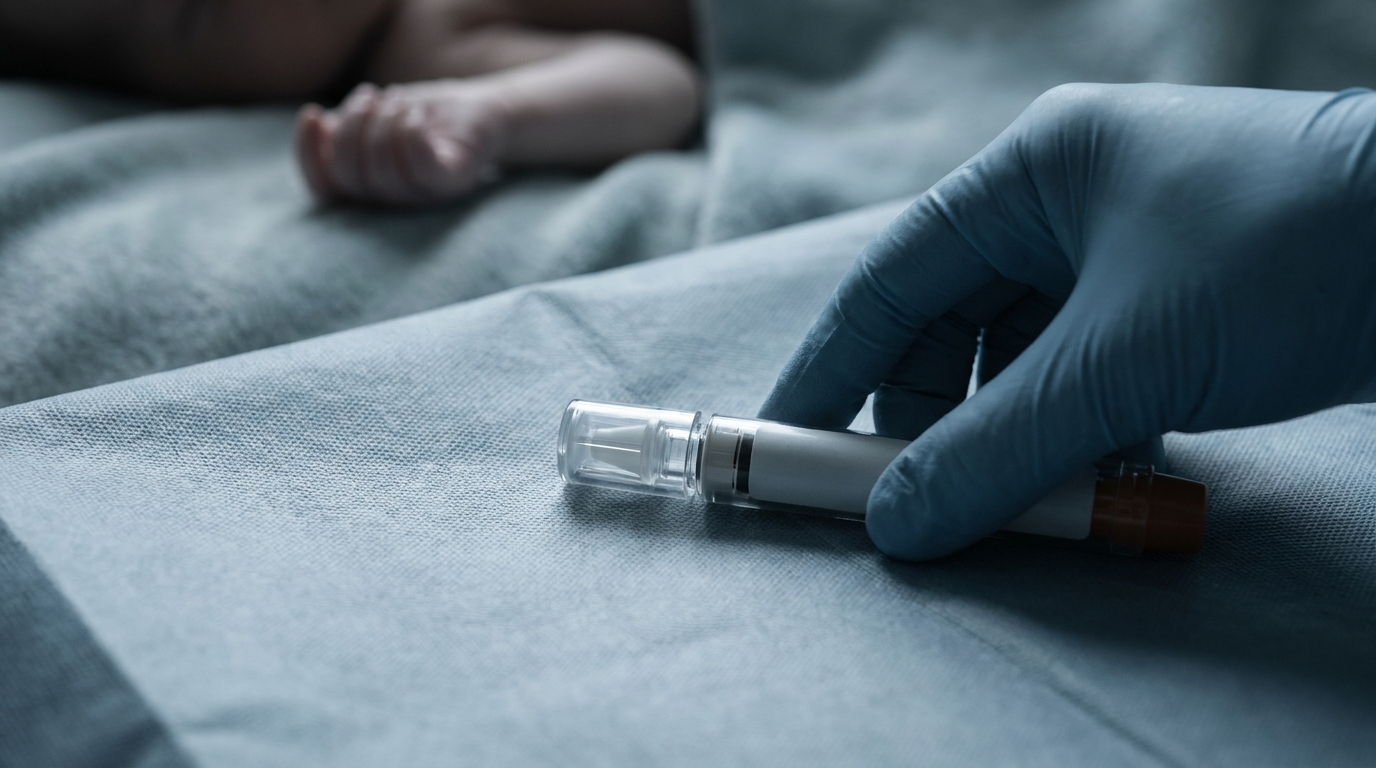
A severe allergic reaction in a baby is one of the situations parents fear most – and for good reason. Within just a few minutes, a seemingly harmless rash can develop into a life-threatening emergency. The good news: if you recognize the signs early and respond correctly, you can save your baby's life. This article gives you – as a parent, grandparent, or caregiver – the knowledge you need to act calmly and decisively in an emergency.
What Happens During a Severe Allergic Reaction?
In an allergy, the immune system overreacts to a substance that is actually harmless – for example, a food, an insect sting, or a medication. The body releases massive amounts of chemical messengers, especially histamine. In a mild allergy, this might only show up as a rash or itching.
In anaphylaxis – the term for the most severe form of allergic reaction – this overreaction affects the entire body. Blood vessels dilate, blood pressure drops, and the airways can swell and narrow. In the worst case, this leads to cardiovascular collapse, known as anaphylactic shock.
What makes it particularly challenging with babies: they can't tell you what they're feeling. No "Mom, my throat feels scratchy" or "I feel dizzy." You have to rely on recognizing the signs that their little body shows you. And that's exactly why it's so important to know these signs.
What Can Trigger a Severe Allergic Reaction in Babies?
The most common triggers of anaphylaxis in infants are:
- Foods: Cow's milk, hen's eggs, peanuts, tree nuts, wheat, soy, fish, and sesame top the list. Reactions can occur particularly when solid foods are first introduced.
- Insect stings: Bee or wasp stings are less common in babies, but when they do occur, the reaction can be severe.
- Medications: Certain antibiotics (such as penicillin) or other drugs can trigger allergic reactions.
- Latex: For example, in some pacifiers, bottle nipples, or medical gloves.
- Unknown triggers: Sometimes the trigger can't be immediately identified. This happens and is no reason to panic – the initial treatment is always the same.
When Is the Risk Greatest?
You should be especially alert when your baby:
- is trying a new food for the first time
- already has a known allergy (e.g., eczema or cow's milk allergy)
- has siblings or parents with severe allergies
- has just been stung by an insect
- is receiving a new medication
A rule of thumb when introducing solid foods: introduce new foods one at a time and wait a few days before trying the next one. That way, if a reaction occurs, you can more easily identify the trigger.
How to Recognize a Severe Allergic Reaction in Your Baby
This is where it gets critical. An allergic reaction can present in different ways, and it can worsen within minutes. Symptoms can be categorized by severity:
Mild Symptoms (Early Signs – Watch Closely!)
- Skin redness, isolated hives (raised, itchy patches of skin)
- Mild swelling of the lips or eyelids
- Increased sneezing or runny nose
- Mild restlessness, increased crying
- Vomiting (single episode)
Moderate Symptoms (Caution – Prepare to Call Emergency Services!)
- Widespread rash or hives covering the entire body
- Significant swelling of the face, lips, tongue, or eyes
- Repeated vomiting or diarrhea
- Hoarse crying or change in voice
- Visible agitation, irritability, or unusual drowsiness
Severe Symptoms (Life-Threatening – Call Emergency Services Immediately!)
- Breathing difficulty: The baby is visibly struggling to breathe, the skin between the ribs retracts with each breath, wheezing or stridor, bluish discoloration of the lips or fingernails
- Circulatory problems: Extreme pallor, the baby becomes limp and barely responsive, cool and clammy skin
- Loss of consciousness: The baby no longer responds to voice or touch
- Respiratory arrest: No visible breathing movements
Very important: A severe allergic reaction always involves at least two organ systems simultaneously – for example, skin AND breathing or skin AND circulation. If you notice that it's not just the skin that's affected but breathing is also becoming more difficult or your baby is becoming unusually limp, that's an alarm signal.
Step by Step: What to Do in an Emergency
If you notice signs of a severe allergic reaction in your baby, every minute counts. Here is your action plan:
Step 1: Stay Calm and Remove the Trigger
- Stay as calm as possible. Your baby senses your fear, and panic doesn't help anyone.
- Remove the trigger if possible: wipe food residue from the mouth, carefully remove an insect stinger (don't squeeze it – scrape it off sideways).
- Do not give your baby anything more to eat or drink.
Step 2: Call Emergency Services
Call emergency services immediately. State clearly:
- Where are you? (Exact address, floor, doorbell name)
- What happened? ("My baby is having a severe allergic reaction.")
- How old is the baby?
- What symptoms do you see? (Breathing difficulty, swelling, rash, loss of consciousness)
- Don't hang up until the dispatcher ends the call. The dispatchers can give you further instructions over the phone.
Step 3: Correct Positioning
Positioning depends on which symptom is most prominent:
- For breathing difficulty: Hold your baby upright in your arms. This position makes breathing easier because gravity helps keep the airways open.
- For circulatory problems (pallor, limpness): Lay your baby on their back and elevate their legs slightly – for example, by placing a rolled-up towel or pillow under their legs. This helps stabilize blood pressure.
- For unconsciousness with breathing: Place your baby in a stable recovery position to prevent choking on vomit. For a baby, lay them on their side and support them so they don't roll back.
- For respiratory arrest: Begin resuscitation immediately (mouth-to-mouth-and-nose ventilation, chest compressions). More on this below.
Step 4: Use an Adrenaline Auto-Injector (If Available)
If your baby has a known severe allergy, your pediatrician may have prescribed an adrenaline auto-injector (commonly known as "EpiPen" or "Jext"). Adrenaline – also called epinephrine in medical terminology – is the most important medication for anaphylaxis. It constricts blood vessels, stabilizes circulation, and opens the airways.
How to use it:
- Take the auto-injector out of its packaging.
- Remove the safety cap.
- Place the tip firmly against the outer side of your baby's thigh – this can be done through clothing.
- Press firmly until you hear a click, and hold the injector in place for at least 10 seconds.
- Remove the injector and massage the injection site for a few seconds.
- Note the time of administration.
Important: The adrenaline auto-injector for babies and toddlers has a lower dose than the one for adults. Always use the device prescribed for your child's weight. Talk to your pediatrician about the correct dosage and have them show and explain how to use it before an emergency occurs.
Even if you have used the auto-injector: Calling emergency services is still necessary! Your baby must always be medically monitored, as symptoms can return after a temporary improvement (known as a biphasic reaction).
Step 5: Monitor and Comfort Your Baby
- Keep your baby warm (but don't overheat) – a blanket over the body, not over the face.
- Speak soothingly to your baby. Your voice is an anchor.
- Continuously monitor breathing. Is the chest rising and falling? Can you hear breathing sounds?
- When emergency services arrive: tell the paramedics what happened, what you suspect as the trigger, what symptoms you observed, and whether and when you administered the adrenaline auto-injector.
If Your Baby Stops Breathing: Infant Resuscitation
In the worst case, anaphylaxis can lead to respiratory and cardiac arrest. In this case, you must begin resuscitation immediately. Every second without oxygen counts.
Quick Guide to Infant Resuscitation:
- Check for responsiveness: Talk to your baby, gently tap the soles of their feet. No response?
- Check breathing: Tilt the head into a neutral position (don't overextend!), look to see if the chest is rising and falling. Take no more than 10 seconds.
- No normal breathing? Begin immediately:
- 5 initial rescue breaths: Place your mouth over the baby's mouth AND nose. Gently blow air in until the chest visibly rises. Don't blow too hard – a baby's lungs are tiny.
- 30 chest compressions: Place two fingers on the center of the chest (lower half of the breastbone). Compress about one-third of the chest depth, quickly (approximately 100–120 times per minute).
- Then alternate: 2 rescue breaths – 30 chest compressions and continue until emergency services arrive or your baby starts breathing normally again.
- If you are alone: Perform resuscitation for one minute before calling emergency services – in babies, oxygen deprivation is the most common cause of cardiac arrest, so the initial rescue breaths take priority.
Prevention: How to Reduce the Risk
While anaphylaxis can't always be prevented, you can reduce the risk and be better prepared:
- Take known allergies seriously: If your baby has had an allergic reaction to something, talk to your pediatrician about allergy testing.
- Always carry your emergency kit: If an adrenaline auto-injector has been prescribed, take it everywhere. Regularly check the expiration date.
- Inform all caregivers: Grandparents, babysitters, childminders, daycare – everyone who looks after your baby needs to know about the allergy and how to use the auto-injector.
- Write down an emergency plan: A laminated card listing the trigger, symptoms, and step-by-step instructions, kept in the diaper bag, can be invaluable in an emergency.
- Introduce new foods mindfully: Give new foods at a time of day when a doctor's office is reachable – not in the evening before bedtime. This way you can observe any reactions and quickly seek medical advice if needed.
- Know about cross-allergies: If your baby is allergic to a specific food, related foods may also be problematic. Your pediatrician can advise you on this.
Key Takeaways
Here are the most important points at a glance:
- A severe allergic reaction always involves multiple organ systems simultaneously.
- Skin + breathing difficulty or skin + circulatory problems = call emergency services immediately.
- Remove the trigger, call emergency services, position correctly, administer adrenaline (if available).
- The adrenaline auto-injector is a lifesaver – don't be afraid to use it. When in doubt, it's always better to use it.
- Even after improvement: your baby must always go to the hospital for monitoring.
- If your baby stops breathing: begin resuscitation immediately.
Hands-On Training
Reading an article is an important first step – but in a real emergency, your muscle memory is what counts. Correct positioning, using an adrenaline auto-injector, rescue breathing, and chest compressions on an infant: all of these can only be recalled in a stressful situation if you've practiced them beforehand. In the baby resuscitation course from Simulation Tirol, you train exactly these life-saving skills on realistic training manikins, with expert guidance and in an atmosphere that leaves room for questions. Because the best thing you can do for your baby is to be prepared.
More Articles
Respiratory Distress Syndrome in Newborns: Causes and Initial Management
Transient tachypnea, meconium aspiration, and surfactant deficiency – how healthcare professionals and parents can distinguish the most common causes of neonatal respiratory distress and which immediate measures can be lifesaving.
Airway Obstruction in Infants: Back Blows and Chest Thrusts
Detailed lay-rescuer guide for choking emergencies in babies under 1 year: positioning, blow technique, alternating measures, and when to call emergency services.
Baby Not Breathing: Infant CPR for Laypeople
A clear, easy-to-understand guide to cardiopulmonary resuscitation (CPR) for babies under one year of age. This article explains how to check breathing, perform rescue breaths, and give chest compressions with the correct hand position – specifically designed for parents and grandparents with no medical background.