Severe Burns: Initial Management and Fluid Therapy
Initial burn management requires a structured approach. This article covers the Rule of Nines, cooling guidelines, the Parkland formula, airway management in inhalation injury, and pain management.

Author: Dr. med. univ. Daniel Pehböck, DESA
Specialist in Anesthesiology and Intensive Care Medicine, AHA-certified ACLS/PALS Instructor, Course Director Simulation Tirol
Reading time approx. 9 min
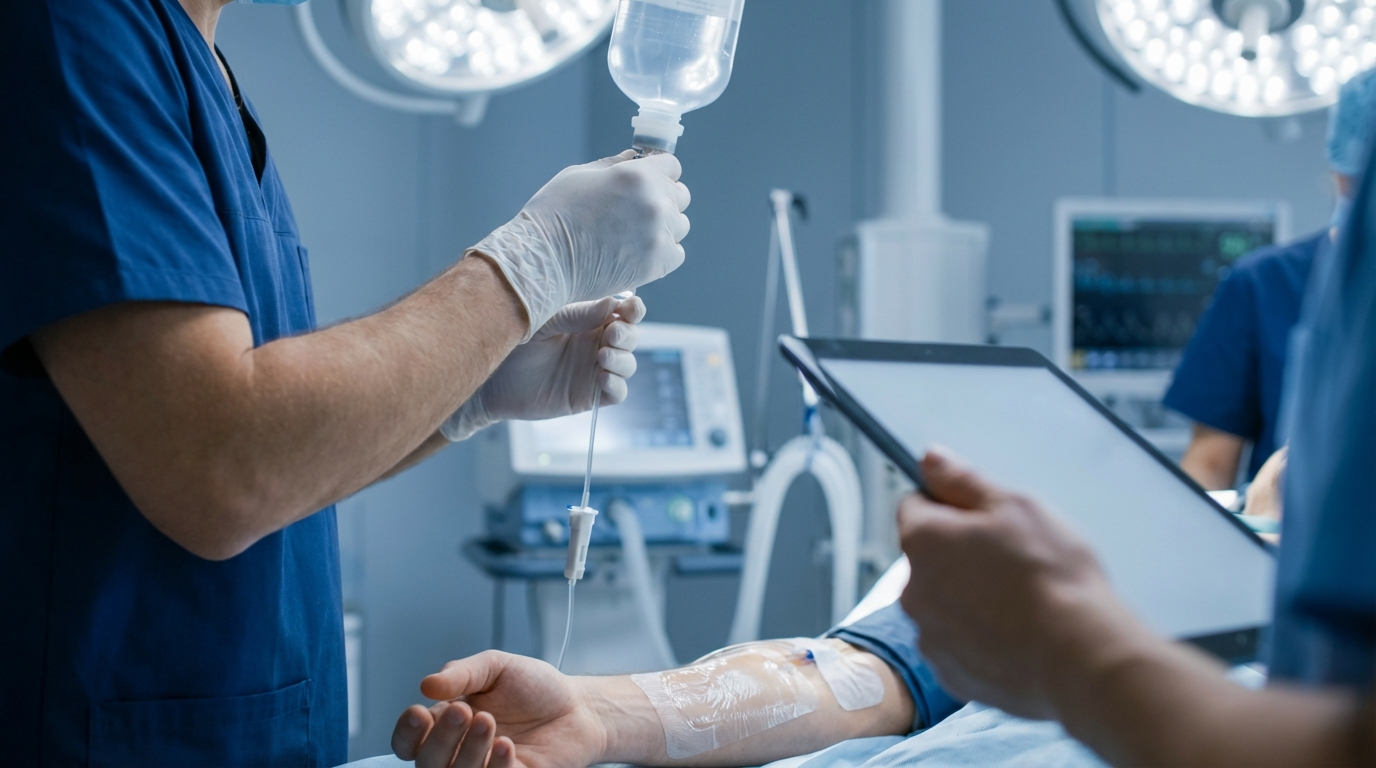
Severe burns are among the most challenging emergencies you can encounter in the clinical or prehospital setting. The combination of massive fluid loss, impending airway failure, severe pain, and potential sepsis risk demands a structured, time-critical approach. The first minutes of initial management are decisive for morbidity and mortality. This article provides you with a practice-oriented overview of initial severe burn management – from estimating the total body surface area burned to fluid therapy, airway management, and pain management.
Primary Assessment: ABCDE in Burn Patients Too
Even though the burn is visually prominent, the well-known ABCDE approach applies to every major burn patient. Burn incidents are frequently accompanied by concomitant trauma – falls from height, explosions, or motor vehicle accidents as the cause of the fire are not uncommon. The burn must not lead you to overlook a concomitant thoracic injury, spinal injury, or intra-abdominal hemorrhage.
Priorities in the Primary Survey
- A – Airway: Inspect the mouth, pharynx, and nose for soot deposits, swelling, and stridor. Early airway management if inhalation injury is suspected (see dedicated section).
- B – Breathing: Auscultation, respiratory rate, SpO₂, rule out pneumothorax (especially in blast injuries). Consider escharotomy for circumferential thoracic burns.
- C – Circulation: Large-bore IV access (at least 2 × 16 G), through burned skin if necessary. Intraosseous access as an alternative. Initiate fluid resuscitation.
- D – Disability: Level of consciousness (GCS), pupils, signs of CO or cyanide poisoning.
- E – Exposure/Environment: Complete removal of clothing, but rigorous heat preservation. Hypothermia is a frequent and underestimated killer in major burn patients.
Estimating Burn Extent
Accurate estimation of the total body surface area (TBSA) burned is the foundation for all subsequent therapeutic decisions – particularly fluid therapy. Two established methods are available to you.
The Wallace Rule of Nines
The Rule of Nines divides the adult body surface into regions of 9% (or multiples thereof) each:
| Body Region | % TBSA |
|---|---|
| Head and neck | 9% |
| Upper extremity (each side) | 9% |
| Anterior trunk | 18% |
| Posterior trunk | 18% |
| Lower extremity (each side) | 18% |
| Genitalia/Perineum | 1% |
Important: Modified values apply to children. An infant's head accounts for approximately 18% of BSA, with correspondingly less for the lower extremities. For pediatric patients, the Lund-Browder chart is recommended, which provides age-adapted percentages.
The Palmar Method
The patient's palm (including closed fingers) corresponds to approximately 1% of BSA. This method is particularly useful for scattered, small-area burns or as a supplement to the Rule of Nines.
Burn Depth
Burn depth significantly influences prognosis and therapy:
- First degree (epidermal): Erythema, pain, no blisters. Not included in TBSA calculation for fluid therapy.
- Second degree superficial (superficial partial-thickness): Blistering, moist wound bed, severe pain, capillary refill preserved.
- Second degree deep (deep partial-thickness): Blisters, whitish or waxy wound bed, reduced pain, diminished capillary refill.
- Third degree (full-thickness burn): Leathery, dry, white or brownish skin, painless (nerve endings destroyed), no capillary refill.
Deep partial-thickness and full-thickness burns typically require surgical management (debridement and skin grafting).
Initial Cooling: What the Evidence Says
Cooling of burn wounds is part of basic first aid knowledge – yet is frequently done incorrectly. The recommended approach is based on available evidence:
- Cool with running tap water (approximately 15–20°C) for 20 minutes, ideally within the first 3 hours after the event.
- No ice water, no ice, no cool packs directly on the wound. Temperatures below 8°C cause vasoconstriction and tissue damage, which can paradoxically increase the extent of the burn injury.
- Large-area burns (> 20% TBSA in adults, > 10% in children): Limit cooling to the affected region. Never cool the entire body. The risk of hypothermia outweighs the local benefit of cooling.
- After cooling: Cover with sterile, non-adherent wound dressings. No home remedies (flour, toothpaste, oil). Cling film as a clean, temporary covering is a pragmatic option in the prehospital setting.
Fluid Therapy: The Parkland Formula and Beyond
Severe burns lead to massive capillary leak with fluid shift into the extravascular space within the first hours. Without adequate volume resuscitation, hypovolemia, shock, and organ failure are imminent. At the same time, over-resuscitation (fluid creep) carries the risk of compartment syndrome, pulmonary edema, and abdominal compartment syndrome.
The Parkland Formula (Baxter Formula)
The Parkland formula is the most widely used starting point for volume calculation in the first 24 hours:
4 mL × body weight (kg) × % TBSA (second and third degree) = total volume in 24 hours
- First half of the calculated volume is infused in the first 8 hours from the time of burn (not from admission!).
- Second half over the following 16 hours.
- Lactated Ringer's solution (or Ringer's acetate) is the recommended infusion fluid.
Calculation Example
An 80 kg patient with 40% TBSA burned (second and third degree):
- 4 × 80 × 40 = 12,800 mL in 24 hours
- First 8 hours: 6,400 mL → approximately 800 mL/h
- Following 16 hours: 6,400 mL → approximately 400 mL/h
Monitoring and Titration
The Parkland formula is explicitly a starting point, not a rigid protocol. The actual infusion rate must be continuously adjusted based on clinical parameters:
- Target urine output: 0.5–1 mL/kg/h in adults, 1–2 mL/kg/h in children. A urinary catheter is mandatory in every major burn patient.
- Clinical signs: Heart rate, mean arterial pressure (MAP ≥ 65 mmHg), capillary refill time, level of consciousness.
- Lactate and base excess as markers of tissue perfusion.
If urine output falls below target, increase the infusion rate by 10–20%. If it is significantly above target, reduce accordingly. A urine output > 2 mL/kg/h in adults should raise suspicion of over-resuscitation – or rhabdomyolysis with myoglobinuria (brownish urine), which requires forced diuresis.
Colloids
In the first 8–12 hours after the burn, the capillary leak is so pronounced that colloids are lost into the extravascular space and offer no advantage. From the second phase (after 12–24 hours), colloids – particularly 5% human albumin – may be considered to stabilize intravascular oncotic pressure and reduce total infusion volume.
Airway Management in Inhalation Injury
Inhalation injury is one of the leading causes of mortality in burn patients. It can affect the upper airways (thermal), the lower airways and lung parenchyma (chemical-toxic), or systemically (CO, cyanide).
Warning Signs of Inhalation Injury
- Burns sustained in enclosed spaces
- Soot deposits in the mouth, nose, or sputum
- Singed nasal hair or eyebrows
- Hoarseness, stridor, dysphonia
- Swelling of the face, lips, oropharyngeal mucosa
- Dyspnea, tachypnea, wheezing
Decision to Intubate
When supraglottic inhalation injury is suspected, the principle is: When in doubt, intubate early. Mucosal swelling can increase so massively within minutes to a few hours that intubation becomes impossible. A patient who initially appears clinically unremarkable can develop complete airway obstruction within a short time.
- Use the largest possible endotracheal tube (≥ 7.5 mm ID in adults) to allow for subsequent bronchoscopy and suctioning.
- Fiberoptic intubation may be necessary if swelling is already present.
- Have equipment for the difficult airway ready (video laryngoscope, bougie, surgical airway).
- After successful intubation: Secure the tube reliably (tape adhesion on burned skin is unreliable – consider ties or wire fixation).
CO Poisoning
Carbon monoxide binds to hemoglobin with 200–250 times the affinity of oxygen. Pulse oximetry is not reliable, as it cannot distinguish COHb from O₂Hb and displays falsely high SpO₂ values.
- Treatment: 100% oxygen via a tight-fitting mask (non-rebreather) or ventilation with FiO₂ 1.0.
- The half-life of COHb decreases from approximately 4–5 hours to approximately 60–90 minutes with 100% O₂.
- Hyperbaric oxygen therapy (HBO) may be considered in severe CO poisoning (COHb > 25%, loss of consciousness, cardiac ischemia, pregnancy), if logistically available.
Cyanide Poisoning
In fires involving the combustion of plastics (polyurethane, nylon, acrylic), concomitant hydrogen cyanide poisoning must be considered. Clinical signs: lactic acidosis despite adequate oxygenation, altered level of consciousness, hemodynamic instability.
- Hydroxocobalamin (Cyanokit®) 5 g IV over 15 minutes as empiric therapy when there is reasonable suspicion. A safe antidote with a favorable side effect profile.
- Alternative: Sodium thiosulfate, though with a slower onset of action.
Pain Management
Burn patients regularly experience the most severe pain, particularly with second-degree burns (intact nociceptors). Aggressive, multimodal pain management is essential – not only for humanitarian reasons, but because uncontrolled pain amplifies the stress response and thereby further increases fluid requirements.
Stepwise Approach
Opioids as the foundation:
- Morphine 0.05–0.1 mg/kg IV, titrated in 2 mg boluses every 5 minutes until pain control is achieved.
- Fentanyl 1–2 µg/kg IV as an alternative, particularly in hemodynamic instability (less histamine release).
- Intramuscular or subcutaneous administration is unreliable in burn patients due to impaired microcirculation – always titrate intravenously or intraosseously.
Ketamine as an adjunct:
- Sub-anesthetic: 0.1–0.3 mg/kg IV as a bolus or 0.1–0.2 mg/kg/h as a continuous infusion.
- Particularly useful in hemodynamic compromise, as it preserves sympathetic tone.
- Analgesic, bronchodilatory, and dissociative – a triple advantage in the burn patient.
Non-opioid analgesics:
- Paracetamol (acetaminophen) 1 g IV as baseline analgesia.
- NSAIDs should be used cautiously – risk of renal function deterioration in already compromised hemodynamics.
Anxiolysis: Midazolam 1–2 mg IV titrated for pronounced anxiety and agitation. Dose cautiously to preserve the ability to assess the level of consciousness.
Escharotomy
In deep, circumferential burns (full-thickness) of the extremities or thorax, compartment syndrome can develop. The leathery, rigid burn eschar does not yield, so increasing swelling from fluid resuscitation dangerously elevates tissue pressure.
Indications
- Extremities: Absent or diminished peripheral pulses, increasing pain, paresthesias, delayed capillary refill distal to the burn.
- Thorax: Restricted chest wall excursion, rising ventilation pressures, deteriorating ventilation.
- Abdomen: Rising intra-abdominal pressure in circumferential trunk burns.
Escharotomy is performed as a longitudinal incision through the full depth of the eschar into the subcutaneous fat. Since the burn eschar in full-thickness burns no longer contains viable nerve endings, the procedure itself is minimally painful – however, it should still be performed under analgesia and sterile conditions.
Transfer Criteria to a Burn Center
Not every burn needs to be treated in a specialized burn center, but in severe burns, early contact is crucial. Transfer criteria include:
- Burns > 20% TBSA in adults, > 10% in children
- Full-thickness burns > 5% TBSA
- Burns to the face, hands, feet, genitalia, perineum, major joints
- Inhalation injury
- Electrical or chemical burns
- Burns in patients with comorbidities that affect healing
- Concomitant injuries where the burn represents the greatest mortality risk
Initial management and stabilization always take place on-site – transfer must not delay initial therapy. Telephone consultation with the burn center is always advisable and enables collaborative treatment planning during the stabilization phase.
Summary of Key Points
- Apply the ABCDE approach consistently – burns must not mask concomitant injuries.
- Determine TBSA using the Rule of Nines (adults) or Lund-Browder chart (children); do not include first-degree burns.
- Cooling: 20 minutes with 15–20°C tap water; prioritize hypothermia prevention in large-area burns.
- Parkland formula as a starting point, guided by urine output (0.5–1 mL/kg/h).
- Secure the airway early when inhalation injury is suspected – swelling develops faster than expected.
- CO poisoning: SpO₂ lies – administer 100% O₂, determine COHb from blood gas analysis.
- Cyanide suspicion: Hydroxocobalamin 5 g IV empirically.
- Pain management: Titrate IV opioids, ketamine as a valuable adjunct.
- Do not delay escharotomy in circumferential burns with impending compromise.
Practical Training
Managing severe burns requires the interplay of rapid assessment, correct volume calculation, airway management, and consistent pain therapy – skills best trained under realistic conditions. In the emergency training courses by Simulation Tirol, you can practice exactly these scenarios in simulation-based settings: from TBSA estimation to Parkland formula calculation under time pressure to the decision for early intubation. Structured training builds the confidence in action that you need in a real emergency.
Want to practice this hands-on?
In our Notfalltraining in deiner Arztpraxis oder Klinik you practice this topic hands-on with high-tech simulators and experienced instructors.
More Articles
Acute Dyspnea: Differential Diagnosis and Immediate Management
Dyspnea has numerous causes ranging from asthma to heart failure to pulmonary embolism. This article presents a systematic approach to differentiation based on history, clinical examination, auscultation, and point-of-care diagnostics.
Acute Hypoglycemia: Emergency Management in Adults and Children
Threshold values, symptom recognition, oral glucose vs. IV dextrose vs. glucagon – with separate dosing for adult and pediatric patients. A common emergency presentation systematically reviewed.
Acute Adrenal Insufficiency: Addisonian Crisis in the Emergency Setting
Adrenal crisis is frequently misdiagnosed and can be fatal. This article describes at-risk patients, clinical signs, immediate hydrocortisone administration, and the management of accompanying hypoglycemia and hyperkalemia.