Acute Hypoglycemia: Emergency Management in Adults and Children
Threshold values, symptom recognition, oral glucose vs. IV dextrose vs. glucagon – with separate dosing for adult and pediatric patients. A common emergency presentation systematically reviewed.

Author: Dr. med. univ. Daniel Pehböck, DESA
Specialist in Anesthesiology and Intensive Care Medicine, AHA-certified ACLS/PALS Instructor, Course Director Simulation Tirol
Reading time approx. 8 min
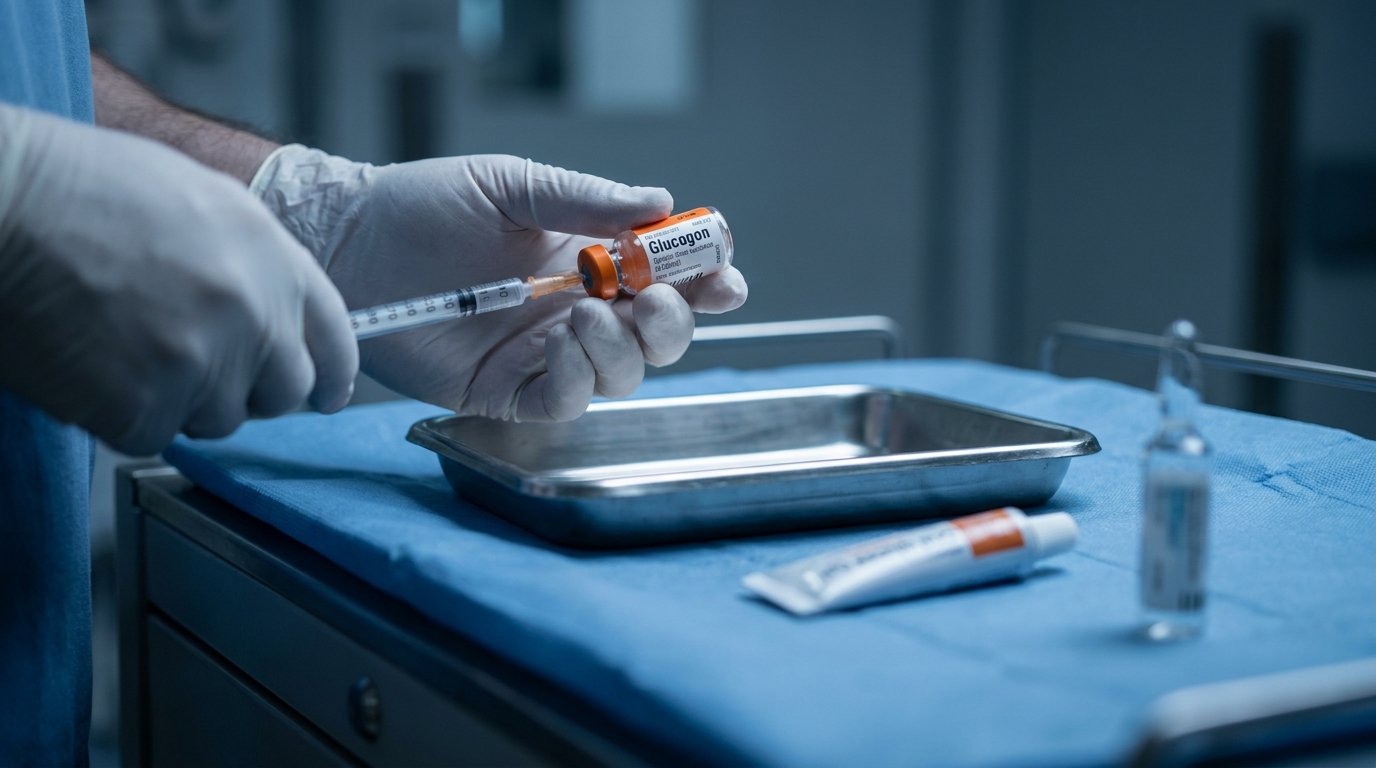
Acute hypoglycemia is one of the most common metabolic emergencies in prehospital and in-hospital emergency medicine. It can lead to irreversible neurological damage within minutes, yet – with rapid recognition and consistent treatment – it is almost always fully reversible. This is precisely why structured hypoglycemia management is part of the core skill set of every emergency physician. This article systematically summarizes the relevant threshold values, clinical symptom recognition, and differentiated treatment for adult and pediatric patients.
Definition and Threshold Values
Hypoglycemia is not defined by a single rigid laboratory value but is clinically identified through Whipple's triad:
- Symptoms consistent with hypoglycemia
- Documented low plasma glucose concentration
- Resolution of symptoms after glucose administration
Numerical Thresholds
| Category | Threshold (venous plasma glucose) | Clinical Significance |
|---|---|---|
| Normoglycemia | 70–100 mg/dL (3.9–5.6 mmol/L) | Target range |
| Level 1 hypoglycemia | < 70 mg/dL (< 3.9 mmol/L) | Alert value, initiate treatment |
| Level 2 hypoglycemia | < 54 mg/dL (< 3.0 mmol/L) | Clinically significant, urgent treatment required |
| Level 3 hypoglycemia | Severe cognitive impairment | Requires third-party assistance, regardless of absolute value |
For the emergency setting: Any patient with altered consciousness and a blood glucose < 60 mg/dL is treated as hypoglycemic. In neonates and infants, lower intervention thresholds may apply (see pediatric section).
Capillary vs. Venous Measurement
Capillary point-of-care measurements (glucose test strips) are the standard for initial assessment in emergencies but have limitations:
- Deviations of up to ±15% compared to laboratory values
- Falsely low readings in shock, centralization, and hypothermia
- Falsely high readings in polycythemia
When in doubt: Treat first, confirm later. Empirical glucose administration based on clinical suspicion is always justified and causes far less harm than untreated severe hypoglycemia.
Pathophysiology in Brief
The brain is almost entirely dependent on glucose as its energy substrate and has no significant glycogen reserves. When plasma glucose drops, physiological counter-regulatory mechanisms unfold in a typical cascade:
- ~80–85 mg/dL: Suppression of endogenous insulin secretion
- ~65–70 mg/dL: Release of glucagon and epinephrine (adrenergic/autonomic symptoms)
- ~50–55 mg/dL: Neuroglycopenic symptoms (cognitive impairment)
- < 40 mg/dL: Loss of consciousness, seizures
- Prolonged severe hypoglycemia: Irreversible neuronal damage
In patients with recurrent hypoglycemia (especially type 1 diabetes), the counter-regulatory threshold is often shifted downward – so-called hypoglycemia unawareness. These patients develop neuroglycopenic symptoms without preceding autonomic warning signs, which significantly complicates diagnosis.
Symptom Recognition: Autonomic vs. Neuroglycopenic Signs
The clinical presentation of hypoglycemia can be divided into two symptom complexes that facilitate systematic recognition:
Autonomic (Adrenergic/Cholinergic) Symptoms
- Tachycardia, palpitations
- Tremor, hand shaking
- Sweating (often profuse)
- Pallor
- Nausea, intense hunger
- Anxiety, agitation
Neuroglycopenic Symptoms
- Difficulty concentrating, confusion
- Speech and visual disturbances
- Coordination deficits, ataxia
- Behavioral abnormalities (aggression, inappropriate behavior)
- Focal neurological deficits (hemiparesis – caution: stroke mimic!)
- Seizures
- Unconsciousness progressing to coma
Differential Diagnostic Pitfalls
Hypoglycemia is a chameleon of emergency medicine. The following differential diagnoses must be considered:
- Stroke: Focal neurological deficits in hypoglycemia are common and can perfectly mimic a stroke. Therefore: blood glucose measurement before CT head – or always as part of the initial assessment.
- Epileptic seizure: Hypoglycemia as a cause of seizures must be ruled out.
- Alcohol intoxication: Frequently overlaps with concurrent hypoglycemia.
- Psychiatric emergencies: Agitation and confusion are often initially misclassified.
Blood glucose measurement is part of the basic workup for any unexplained altered consciousness – this cannot be emphasized enough.
Causes in the Emergency Setting
The most common triggers of acute hypoglycemia you will encounter in emergency medical services:
- Insulin overdose (accidental or suicidal)
- Sulfonylurea overdose (caution: prolonged hypoglycemia lasting hours to days)
- Insufficient food intake with ongoing antidiabetic therapy
- Alcohol excess (inhibition of hepatic gluconeogenesis)
- Sepsis (increased glucose consumption)
- Liver failure (impaired glycogenolysis and gluconeogenesis)
- Adrenal insufficiency (Addisonian crisis)
- Insulinoma (rare, but consider in persistent hypoglycemia)
In pediatric patients, congenital metabolic disorders, ketotic hypoglycemia, and fasting during intercurrent infections are additional common causes.
Treatment in Adults
Treatment is guided by the level of consciousness and the available route of access. The following stepwise approach has proven effective:
Step 1: Alert, Cooperative Patient (Oral Glucose Administration)
- 15–20 g of rapidly absorbable carbohydrates orally:
- 200 mL fruit juice or sugar-containing soda
- 4–5 glucose tablets
- 1 tube of glucose gel (e.g., Dextro Energy Liquid)
- Blood glucose check after 15 minutes
- If blood glucose remains < 70 mg/dL: repeat oral administration
- After stabilization: complex carbohydrates (bread, crackers) as follow-up to prevent recurrence
Step 2: Patient with Altered Consciousness and IV Access
- Dextrose 40% (D40): 0.5 g/kg IV – for a 70 kg adult, this corresponds to approximately 75–100 mL D40 (= 30–40 g glucose)
- Practical tip: Initially 40–60 mL D40 as a bolus, then blood glucose check after 5 minutes and repeat dosing as needed
- Caution – venous irritation: D40 is highly hyperosmolar. Ideally administer through a large-bore peripheral IV. Extravasation carries a risk of tissue necrosis.
- Alternative: Dextrose 10% or 20% in larger volumes – better venous tolerability but slower glucose rise
- After stabilization: Consider a dextrose 10% (D10) infusion as maintenance therapy, especially in sulfonylurea-induced hypoglycemia
Step 3: Patient with Altered Consciousness without IV Access
- Glucagon 1 mg IM or SC (for adults > 25 kg body weight)
- Alternatively: Glucagon nasal spray 3 mg intranasally (if available)
- Onset of action: 10–15 minutes (significantly slower than IV dextrose)
- Limitations: Glucagon is ineffective when glycogen stores are depleted – i.e., in:
- Chronic liver disease
- Alcohol-induced hypoglycemia
- Prolonged fasting
- Adrenal insufficiency
- After onset of effect: Oral carbohydrate intake as soon as protective reflexes are present
Important Additional Measures
- Close blood glucose monitoring (every 15–30 minutes) for at least 2 hours
- Sulfonylurea-induced hypoglycemia: Mandatory inpatient monitoring for 24–72 hours – recurrence is the rule, not the exception
- Thiamine 100 mg IV before or simultaneously with glucose administration if chronic alcohol abuse or malnutrition is suspected (prevention of Wernicke encephalopathy)
- Suicidal insulin overdose: Long-term monitoring, continuous glucose infusion over hours if needed, consider depot insulin effects
Treatment in Pediatric Patients
Hypoglycemia in children follows the same pathophysiological principles but requires weight-based dosing and age-appropriate approaches.
Thresholds in Children and Neonates
- Children > 48 hours of age: < 60 mg/dL (< 3.3 mmol/L) requires treatment
- Neonates in the first 48 hours of life: < 45 mg/dL (< 2.5 mmol/L) requires intervention
- Symptomatic neonates: Any hypoglycemia with clinical signs requires immediate treatment
Symptom Characteristics in Children
In infants and toddlers, the typical autonomic warning signs are often absent. Instead, watch for:
- Poor feeding, lethargy
- Jitteriness, irritability
- Pale, mottled skin
- Apnea (in neonates)
- Seizures
- Hypothermia
Stepwise Pediatric Treatment
Alert child with intact swallowing reflex:
- Oral glucose administration: 0.3 g/kg body weight as glucose tablets, juice, or glucose gel
- Blood glucose check after 15 minutes
- Older children: Approach analogous to adults (15 g rapidly absorbable carbohydrates)
Child with altered consciousness and IV access:
| Age Group | Solution | Dose |
|---|---|---|
| Neonates | Dextrose 10% (D10) | 2 mL/kg IV as bolus (= 0.2 g/kg) |
| Infants/Toddlers | Dextrose 10% (D10) | 2–5 mL/kg IV (= 0.2–0.5 g/kg) |
| Children > 2 years | Dextrose 20% (D20) | 2–5 mL/kg IV (= 0.5–1.0 g/kg) |
| Adolescents | Dextrose 20–40% | Analogous to adult dosing, max. 25 g initially |
- General rule: 0.5 g/kg body weight of glucose IV as the initial bolus
- Never use D40 or D50 in neonates and infants! The hyperosmolar solution can cause cerebral edema, venous irritation, and hyperglycemia. Maximum concentration in neonates: D10; in infants/toddlers: D10–D20.
- Administration: slowly over 2–5 minutes
- Subsequently: Continuous glucose infusion with D10, target blood glucose > 60 mg/dL
Child with altered consciousness without IV access:
- Glucagon IM:
- < 25 kg body weight (or < 6 years): 0.5 mg
- ≥ 25 kg body weight (or ≥ 6 years): 1.0 mg
- Glucagon nasal spray (3 mg) is approved for children with a body weight of 4 kg and above
- Intraosseous access (IO): If glucagon is unavailable or ineffective, IO administration of D10 takes priority over further IM attempts in an emergency
- Alternatively, if the swallowing reflex is intact: Apply glucose gel buccally (massage into the buccal pouch)
Algorithm: Structured Approach Overview
- Recognize: Altered consciousness → blood glucose measurement (capillary)
- Confirm: Blood glucose < 60 mg/dL or clinically consistent
- Secure: Secure the airway, recovery position if unconscious
- Treat:
- Alert → oral glucose
- Unconscious + IV access → IV dextrose (D40 for adults, D10–D20 for children)
- Unconscious + no access → glucagon IM/intranasal
- Monitor: Blood glucose after 5 minutes (IV) or 15 minutes (oral/IM)
- Prevent recurrence: Complex carbohydrates orally or continuous glucose infusion
- Identify the cause: Medication history, suicidality assessment, sepsis screening
- Disposition: Outpatient discharge only if the cause is clear and singular, and blood glucose has been normalized for at least 2 hours. Sulfonylurea and insulin overdoses always require inpatient admission.
Special Situations
Refractory Hypoglycemia
If blood glucose does not rise despite repeated glucose administration or drops again rapidly:
- Consider insulinoma, suicidal insulin overdose with depot preparations, or occult sulfonylurea ingestion
- Continuous glucose infusion (D10–D20 via syringe pump)
- Octreotide 50 µg SC every 6–8 hours for sulfonylurea poisoning (inhibits endogenous insulin release)
- Diazoxide in consultation with endocrinology/toxicology
Hypoglycemia and Resuscitation
In cardiac arrest situations, hypoglycemia is one of the reversible causes (H's and T's). Blood glucose measurement should be performed early. If hypoglycemia is confirmed during CPR: Administer dextrose IV or IO without interrupting chest compressions.
Hypoglycemia in Non-Diabetic Patients
Hypoglycemia in patients without diabetes is always a red flag for a potentially serious underlying condition and requires further workup:
- Liver failure
- Sepsis
- Adrenal insufficiency
- Insulinoma
- Non-islet cell tumors
- Drug interactions (e.g., beta-blockers, fluoroquinolones)
Documentation and Handover
A structured handover using the SBAR or ISOBAR framework should include the following points:
- Measured blood glucose at arrival and after treatment
- Amount and concentration of glucose administered and route of administration
- Time course until clinical improvement
- Suspected cause of hypoglycemia
- Chronic antidiabetic medication (especially insulin type and last administration time)
- Recommendation for monitoring duration
Practical Training
Hypoglycemia is an emergency that appears straightforward in theory – but in practice can be challenging due to atypical presentations, pediatric dose calculations under stress, and differentiation from other diagnoses. In the Emergency Physician Refresher Course by Simulation Tirol, you train exactly these scenarios in realistic simulations: from the unconscious diabetic in a stairwell to neonatal hypoglycemia. The combination of case studies, hands-on training, and structured debriefing reinforces decision-making algorithms that need to be second nature in a real emergency. More information is available at simulationtirol.com.
More Articles
Acute Dyspnea: Differential Diagnosis and Immediate Management
Dyspnea has numerous causes ranging from asthma to heart failure to pulmonary embolism. This article presents a systematic approach to differentiation based on history, clinical examination, auscultation, and point-of-care diagnostics.
Acute Adrenal Insufficiency: Addisonian Crisis in the Emergency Setting
Adrenal crisis is frequently misdiagnosed and can be fatal. This article describes at-risk patients, clinical signs, immediate hydrocortisone administration, and the management of accompanying hypoglycemia and hyperkalemia.
Acute Back Pain: Red Flags and Emergency Differentiation
Acute back pain is a common presenting complaint that may conceal aortic dissection, cauda equina syndrome, or retroperitoneal hemorrhage. This article systematizes red flag assessment and immediate management of vascular and neurological causes.