Hypothermia in Emergency Medicine: Stages, Rescue, and Resuscitation
Accidental hypothermia requires adapted resuscitation algorithms and specialized rescue techniques. This article covers the Swiss staging system, the afterdrop phenomenon, rewarming methods, and the specifics of drug administration in hypothermia.

Author: Dr. med. univ. Daniel Pehböck, DESA
Specialist in Anesthesiology and Intensive Care Medicine, AHA-certified ACLS/PALS Instructor, Course Director Simulation Tirol
Reading time approx. 8 min
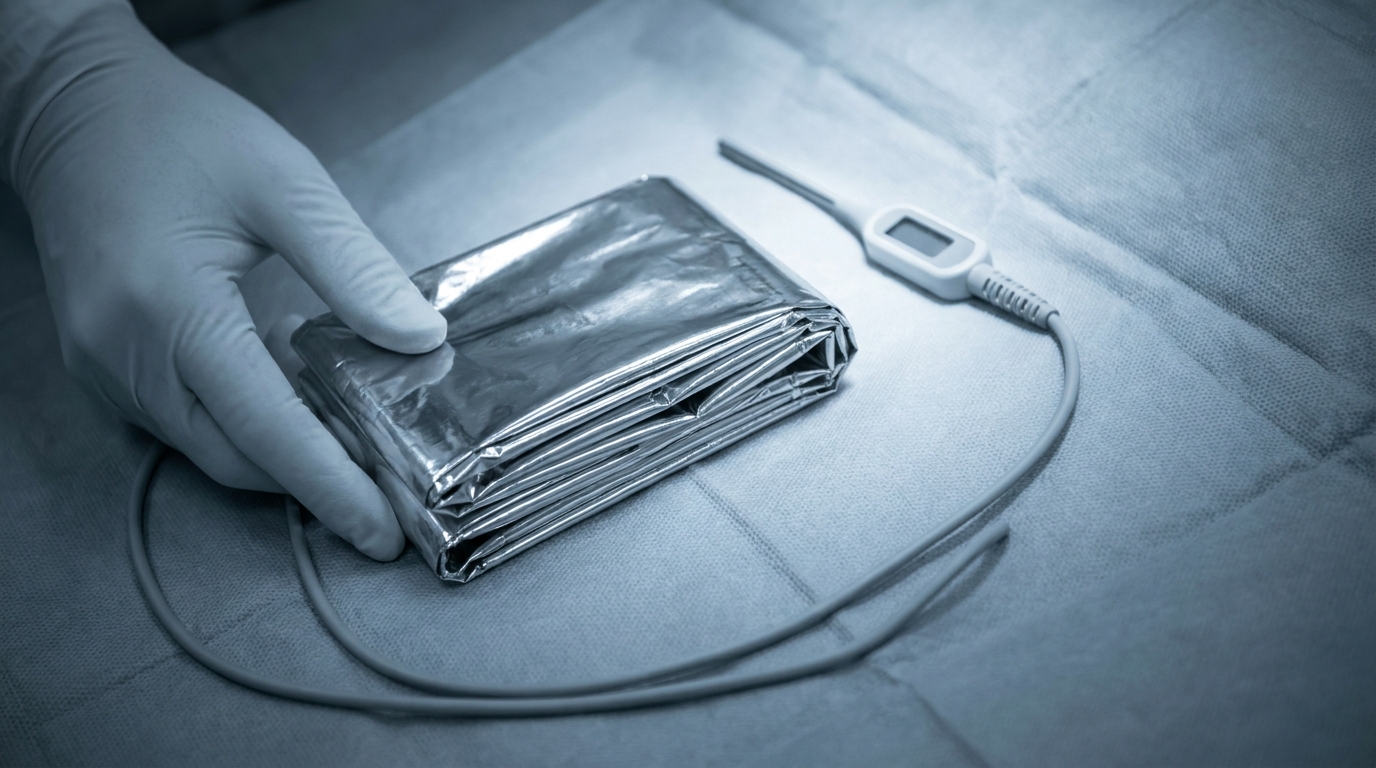
Accidental hypothermia is one of those emergency situations where standardized algorithms have limited applicability, and clinical judgment can make the difference between life and death. Core temperature drops, metabolism slows down, the myocardium becomes increasingly irritable – and yet, especially in hypothermia, the principle holds: "Nobody is dead until warm and dead." This article examines the staging system according to the Swiss classification, the pathophysiological pitfalls during rescue and transport, the specifics of resuscitation under hypothermia, and the evidence-based rewarming methods that you need to know as an emergency physician or as a nurse in the emergency department.
Pathophysiology of Accidental Hypothermia
Once core temperature drops below 35 °C, a cascade of compensatory and eventually decompensatory mechanisms is set in motion. Initially, the body responds with peripheral vasoconstriction, shivering, and increased catecholamine release. As temperature continues to fall, these mechanisms fail:
- 35–32 °C: Maximum shivering, tachycardia, tachypnea, altered consciousness. Oxygen consumption is still elevated.
- 32–28 °C: Shivering ceases, progressive bradycardia, atrial fibrillation becomes common, consciousness is lost. Oxygen consumption drops to approximately 50% of normal.
- Below 28 °C: High risk of ventricular fibrillation (VF) and asystole. Myocardial excitability is maximally increased. Paradoxically, hypothermia simultaneously protects the brain – cerebral metabolism decreases by approximately 6–8% per degree Celsius of temperature drop.
This dual effect – arrhythmogenicity on one hand, neuroprotection on the other – shapes the entire treatment strategy. The heart is vulnerable, the brain is tolerant. This necessitates reducing mechanical and pharmacological stimulation of the myocardium to a minimum, while at the same time not prematurely terminating resuscitation.
The Swiss Staging System (Bernese Hypothermia Algorithm)
The internationally recognized Swiss staging system from the University of Bern allows clinical assessment of the degree of hypothermia even without available core temperature measurement. It is primarily based on clinical signs:
Stage HT I – Mild Hypothermia (35–32 °C)
- The patient is awake and shivering
- Consciousness is clear, possibly slightly altered
- Clinical correlate: "shivering, conscious"
Stage HT II – Moderate Hypothermia (32–28 °C)
- Consciousness is impaired, but the patient is still rousable
- Shivering may have already ceased
- Clinical correlate: "impaired consciousness, not shivering"
Stage HT III – Severe Hypothermia (28–24 °C)
- The patient is unconscious
- Vital signs are present (circulation measurable, breathing may be present)
- High risk of arrhythmia
- Clinical correlate: "unconscious, vital signs present"
Stage HT IV – Severe Hypothermia with Cardiac Arrest (below 24 °C)
- Cardiac arrest: no pulse, no breathing
- Resuscitation is mandatory until proven otherwise
- Clinical correlate: "apparent death"
Stage HT V – Irreversible Death from Hypothermia
- Core temperature below 13.7 °C (the lowest survived core temperature was 13.7 °C)
- Non-compressible chest wall, other definitive signs of death
- Potassium level above 12 mmol/L as a surrogate marker for irreversible cell death
The staging system is particularly valuable when no epitympanic or esophageal temperature measurement is available. Rectal measurements are unreliable in hypothermia and provide delayed values – in the prehospital setting, epitympanic measurement should be preferred whenever possible.
The Afterdrop Phenomenon
Afterdrop refers to the further decline in core temperature after the start of rescue or rewarming. It is a central concept that determines the entire rescue strategy.
Mechanisms of Afterdrop
Two mechanisms play a role:
- Conductive afterdrop: Cold blood from the periphery reaches the body core after the release of vasoconstriction (e.g., due to position changes, active movement, external heat application). Simultaneously, warm core blood flows into the cold periphery.
- Convective heat transfer: Due to the temperature gradient between the cold periphery and the warmer core alone, passive heat flow to the outside occurs, even without circulatory changes.
Clinical Consequence
Afterdrop can decrease core temperature by an additional 1–5 °C. In a person at stage HT II (core temperature 30 °C), improper transport can push the temperature into the critical range below 28 °C – thereby triggering ventricular fibrillation.
Practical consequences for rescue:
- Horizontal positioning and horizontal transport – consistently prevent the person from standing or sitting upright
- Minimal self-movement by the affected person – do not ask for active cooperation
- Gentle handling: any unnecessary movement, any jolt can drive the irritable myocardium into ventricular fibrillation
- Remove wet clothing with as little movement as possible
- Passive insulation (rescue blanket, blankets, wind-protected area) as a first measure
Rewarming Methods
The choice of rewarming method depends on the hypothermia stage and available resources.
Passive External Rewarming
- Indication: HT I (mild hypothermia, patient is still shivering)
- Principle: Insulation, dry clothing, warm environment. The body rewarms through its own thermogenesis (shivering).
- Rate: approximately 0.5–2 °C per hour
Active External Rewarming
- Indication: HT II and HT III (when no cardiac arrest is present)
- Methods: Warm intravenous fluids (38–42 °C), forced-air warming devices (Bair Hugger), heat packs on the trunk (axillae, groin, thorax), chemical heat pads
- Important: Apply heat to the trunk, not to the extremities → minimize afterdrop risk
- Rate: approximately 1–2 °C per hour
Active Internal (Invasive) Rewarming
- Indication: HT III with unstable circulation, HT IV (cardiac arrest)
- Methods:
- Warm IV infusions (42 °C) – alone only a minor effect (approximately 0.5–1 °C per hour at 500 mL/h)
- Peritoneal lavage with warm saline (42 °C)
- Thoracic lavage via bilateral chest drains (42 °C irrigation)
- Extracorporeal rewarming: ECLS (Extracorporeal Life Support) or ECMO – the gold standard in HT IV
ECMO as the Gold Standard in Hypothermic Cardiac Arrest
Veno-arterial ECMO (VA-ECMO) enables controlled rewarming at rates of 4–10 °C per hour with simultaneous circulatory support. The AHA guidelines recommend early transport to an ECMO center in hypothermic cardiac arrest. The decision for or against ECMO is based, among other factors, on the potassium level:
- Potassium ≤ 8 mmol/L: ECMO attempt justified
- Potassium 8–12 mmol/L: Individual decision, prognosis increasingly poor
- Potassium > 12 mmol/L: Resuscitation is generally futile (as a marker for prolonged cell death)
Additional negative predictors include: submersion-related cardiac arrest (asphyxia before hypothermia), trauma as the cause, burial-related airway obstruction.
Resuscitation in Hypothermia – Algorithm Modifications
Resuscitation in severe hypothermia deviates from the standard ALS algorithm in several ways. The following recommendations are based on the current AHA guidelines and ERC guidelines.
Basic Measures
- Extend pulse check: Up to 60 seconds for the pulse check, as extreme bradycardia with a barely palpable pulse may be present. Premature initiation of chest compressions in the presence of an existing rhythm can trigger VF.
- Start CPR if no pulse is palpable and no organized rhythm is visible on the ECG. Standard quality: 30:2, rate 100–120/min, compression depth 5–6 cm.
- Airway management: Endotracheal intubation is safe in hypothermic patients and is recommended. The previously described risk of VF induction by the tube has not been confirmed by evidence.
Defibrillation
- Core temperature < 30 °C: Maximum of three defibrillation attempts. If ROSC is not achieved after three shocks, defer further defibrillation attempts until rewarming to > 30 °C.
- Core temperature ≥ 30 °C: Standard ALS algorithm regarding defibrillation.
The rationale: The hypothermic myocardium exhibits an altered action potential. The refractory period is prolonged, and the defibrillation threshold is elevated. Repeated unsuccessful shocks can cause additional myocardial damage.
Drug Administration
This is one of the most clinically important points. Pharmacokinetics change fundamentally under hypothermia:
- Hepatic metabolism is drastically reduced
- Renal clearance decreases
- Protein binding is altered
- Receptor sensitivity in the myocardium is diminished
The following recommendations apply:
| Core Temperature | Epinephrine | Amiodarone | Rationale |
|---|---|---|---|
| < 30 °C | Do not administer epinephrine | Do not administer amiodarone | Drugs are ineffective on the hypothermic myocardium, accumulate, and may become toxic upon rewarming |
| 30–35 °C | Epinephrine 1 mg IV, but double the interval (every 6–10 min instead of 3–5 min) | Amiodarone 300 mg as a single dose, further doses only > 35 °C | Reduced metabolism → slowed clearance |
| > 35 °C | Standard ALS dosing: 1 mg every 3–5 min | Standard ALS dosing | Normal pharmacokinetics approximately restored |
When to Terminate CPR?
The decision to terminate resuscitation in hypothermic cardiac arrest is one of the most difficult in emergency medicine. The general principles are:
- Continue resuscitation until core temperature has been raised to at least 32–35 °C or an ECMO center has been reached
- Termination criteria: definitive signs of death, potassium > 12 mmol/L, non-survivable concomitant injuries, obvious asphyxia prior to the onset of hypothermia (e.g., prolonged submersion > 60 minutes in warm water)
- When in doubt: continue and transport to an ECMO center
There are documented cases of complete neurological recovery after several hours of CPR in severe hypothermia. The longest documented successful resuscitation in hypothermia extended over several hours.
Special Scenarios
Avalanche Burial
In avalanche victims, differentiating between primary hypothermic cardiac arrest and asphyxia is crucial. Markers suggesting asphyxia as the cause:
- Airway obstructed upon extrication (snow in the mouth and trachea)
- No air pocket present
- Burial duration > 60 minutes with obstructed airway
- Potassium > 8 mmol/L as an indicator of prolonged hypoxia
In this case, the prognosis is poor even with ECMO, as the brain was already damaged by hypoxia before hypothermia set in.
Submersion (Drowning in Cold Water)
Children have a more favorable surface-to-volume ratio, leading to more rapid cooling and therefore potentially better neuroprotective effects. Here too, the principle applies: when in doubt, continue resuscitation and rewarm.
Hypothermia in Trauma
Hypothermia in the context of the "lethal triad" (hypothermia, acidosis, coagulopathy) must be clinically distinguished from accidental hypothermia. In trauma patients, bleeding control and volume resuscitation take priority. Rewarming alone will not solve the problem if bleeding continues.
Transport Decision and Algorithm
The transport decision for hypothermic patients follows a clear algorithm:
- HT I–II (stable): Transport to the nearest appropriate hospital, active external rewarming en route
- HT III (unstable, without cardiac arrest): Transport to a hospital with an intensive care unit and invasive rewarming capabilities; ECMO availability is desirable
- HT IV (cardiac arrest): Direct transport to an ECMO center – with ongoing CPR. Mechanical CPR devices (LUCAS, AutoPulse) are of great benefit here for longer transport distances.
Coordination with the dispatch center is essential. In Austria, several ECMO centers are available. Early notification must be made so that the ECMO team is ready upon arrival.
Practical Training
Resuscitation in hypothermia requires not only theoretical knowledge but also practiced implementation of adapted algorithms – from gentle rescue techniques to modified drug administration to transport decisions toward an ECMO center. In the Notarzt-Refresher by Simulation Tirol, you can work through exactly these scenarios in realistic simulations, train clinical decision points under time pressure, and prepare your team for real-life emergencies. More information and dates can be found at simulation.tirol.
More Articles
Acute Dyspnea: Differential Diagnosis and Immediate Management
Dyspnea has numerous causes ranging from asthma to heart failure to pulmonary embolism. This article presents a systematic approach to differentiation based on history, clinical examination, auscultation, and point-of-care diagnostics.
Acute Hypoglycemia: Emergency Management in Adults and Children
Threshold values, symptom recognition, oral glucose vs. IV dextrose vs. glucagon – with separate dosing for adult and pediatric patients. A common emergency presentation systematically reviewed.
Acute Adrenal Insufficiency: Addisonian Crisis in the Emergency Setting
Adrenal crisis is frequently misdiagnosed and can be fatal. This article describes at-risk patients, clinical signs, immediate hydrocortisone administration, and the management of accompanying hypoglycemia and hyperkalemia.