Targeted Temperature Management After Resuscitation
Targeted temperature management after ROSC significantly influences neurological outcome. This article examines target temperatures, cooling methods, duration of hypothermia, and rewarming strategies according to current guidelines.

Author: Dr. med. univ. Daniel Pehböck, DESA
Specialist in Anesthesiology and Intensive Care Medicine, AHA-certified ACLS/PALS Instructor, Course Director Simulation Tirol
Reading time approx. 8 min
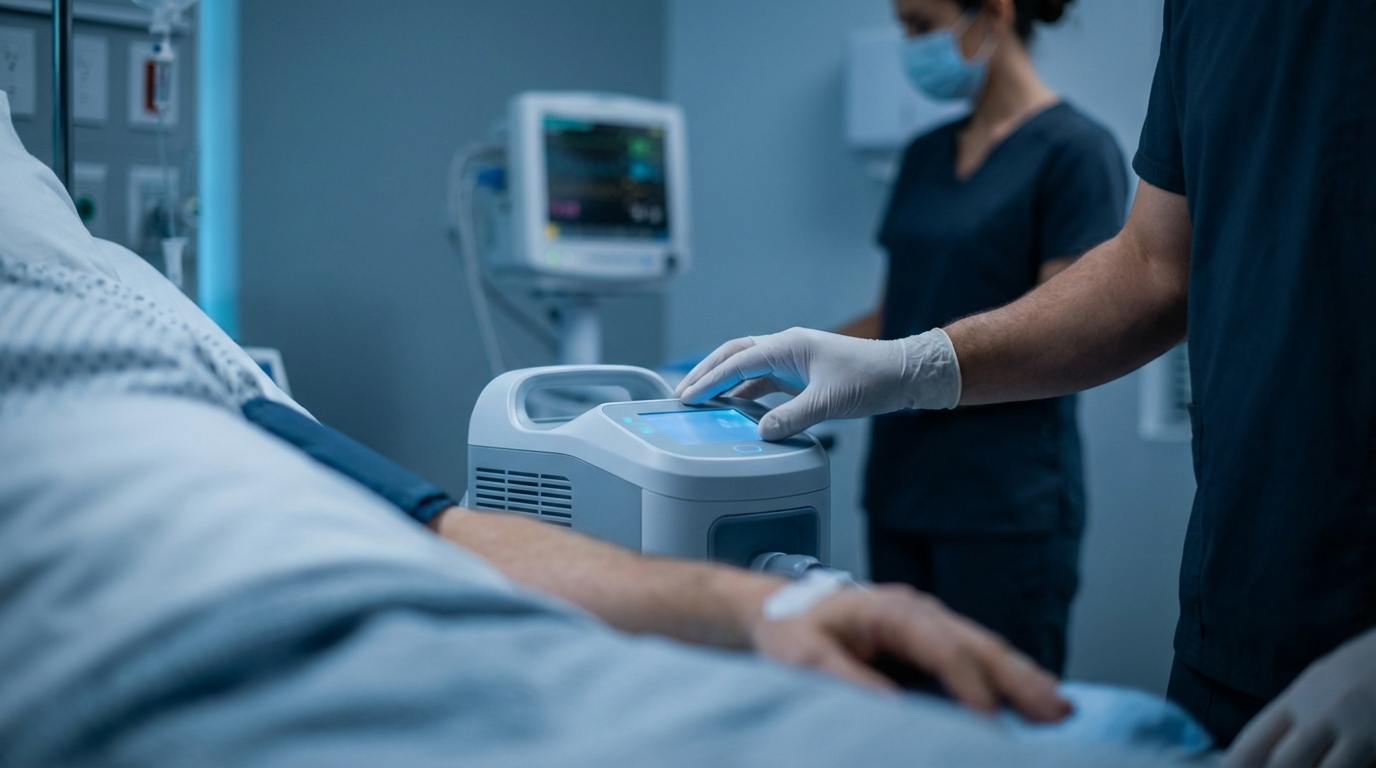
Targeted Temperature Management (TTM) – still often referred to as "therapeutic hypothermia" in clinical practice – is one of the few interventions after successful resuscitation that has been shown to improve neurological outcome. After achieving Return of Spontaneous Circulation (ROSC), a critical phase begins in which secondary brain injury from reperfusion injury, oxidative stress, and inflammatory cascades massively threatens survival and functional recovery. Targeted control of core body temperature is a central element of post-resuscitation care – and at the same time an area where recommendations have become more nuanced in recent years. This article summarizes the key aspects of TTM after cardiac arrest: pathophysiology, target temperatures, practical cooling methods, duration, controlled rewarming, and common complications.
Pathophysiological Basis: Why Temperature Control?
After cardiac arrest, global ischemia and subsequent reperfusion trigger a cascade of harmful processes in the brain. This so-called post-cardiac arrest brain injury includes:
- Excitotoxicity from massive glutamate release
- Mitochondrial dysfunction with impaired energy production
- Free radicals and oxidative stress during the reperfusion phase
- Microvascular dysfunction with impaired autoregulation
- Apoptosis cascades that progress over hours to days after ROSC
- Neuroinflammation with microglial activation and cytokine release
An elevated core body temperature – even in the range of mild hyperthermia (>37.7 °C) – significantly accelerates all of these processes. Fever after resuscitation is an independent predictor of worse neurological outcome and increased mortality. Hypothermia, on the other hand, reduces cerebral metabolism by approximately 6–10% per degree Celsius of temperature reduction, inhibits pro-apoptotic signaling pathways, and decreases free radical formation.
Evidence Base and Target Temperature
The Landmark Studies
The original randomized trials from 2002 (the HACA study and the Australian study by Bernard et al.) demonstrated a clear benefit of cooling to 32–34 °C compared to no temperature control in patients with ventricular fibrillation as the initial rhythm. These data led to the widespread implementation of therapeutic hypothermia.
The TTM trial (Nielsen et al.) subsequently compared a target temperature of 33 °C with 36 °C and found no significant difference in mortality or neurological outcome. This led to a shift in recommendations toward a broader temperature corridor.
The TTM2 trial compared targeted hypothermia at 33 °C with normothermia alone (target temperature ≤37.5 °C, treatment of fever) and likewise showed no significant difference in the primary endpoint (all-cause mortality at 6 months).
Current Recommendations
Current AHA and ERC/ESICM guidelines recommend based on available evidence:
- Consistent fever prevention (≤37.5 °C) for at least 72 hours after ROSC in all comatose patients after cardiac arrest
- Targeted hypothermia at 32–36 °C may be considered as an active strategy, particularly when local expertise and infrastructure are available
- There is no evidence for the superiority of any specific target temperature within the 32–36 °C corridor
- The recommendation applies to all initial rhythms – both shockable (VF/pVT) and non-shockable rhythms (asystole/PEA)
- Avoiding hyperthermia is the absolute minimum consensus and the core element of any post-resuscitation strategy
The choice of a specific target temperature should be individualized. Factors such as hemodynamic stability, bleeding risk, and comorbidities factor into the decision.
Indications and Patient Selection
TTM is indicated in comatose patients (GCS Motor Score ≤5 or absent meaningful response to verbal commands) after cardiac arrest with ROSC, regardless of:
- Initial rhythm (shockable or non-shockable)
- Location of cardiac arrest (in-hospital or out-of-hospital)
Relative Contraindications and Special Considerations
- Active, uncontrollable bleeding – hypothermia impairs coagulation
- Severe sepsis/septic shock – risk-benefit assessment required
- Pre-existing severe hypothermia at the time of discovery
- Terminal underlying disease with clear treatment limitations
Patients who rapidly regain consciousness after ROSC and respond appropriately do not require TTM in the strict sense but should still be consistently monitored for fever.
Practical Implementation: Phases of TTM
Targeted Temperature Management is divided into three clearly defined phases:
Phase 1: Induction (Initiating Cooling)
The goal is to reach the chosen target temperature as quickly as possible after ROSC. Recommended measures:
- Intravenous cooling: Rapid infusion of up to 30 ml/kg of ice-cold (4 °C) isotonic crystalloid solution (0.9% NaCl or Ringer's lactate) – Caution: Prehospital administration of large volumes of cold infusions is no longer recommended based on current evidence, as it may promote hemodynamic instability and pulmonary edema without improving outcome. Volume-based cooling is therefore primarily an in-hospital measure and should be used judiciously.
- External cooling methods: Ice packs (groin, axillae, neck), cooling blankets, surface cooling systems with circulating cold water
- Intravascular cooling catheters: The most effective method with the best temperature control. A cooling catheter (usually placed femorally or jugularly) circulates cooled fluid in a closed system.
- Evaporative cooling: Nasal evaporative cooling can be used in the prehospital setting
Practical tip: Combining multiple methods accelerates induction. A target temperature of 33 °C is typically reached within 2–4 hours; 36 °C is reached considerably faster.
Phase 2: Maintenance
Maintaining the target temperature is the most critical phase:
- Duration: At least 24 hours at a target temperature of 32–36 °C. Some centers choose 24–48 hours at 33 °C.
- Target corridor: Temperature should fluctuate no more than ±0.5 °C around the target value
- Feedback-controlled systems (e.g., intravascular cooling catheters or surface systems with servo control) are clearly superior to passive methods here
- Temperature measurement: Continuous core temperature measurement is mandatory. Suitable methods include:
- Esophageal probe (accurate, minimally invasive)
- Bladder catheter with temperature sensor (caution: inaccurate with low urine output)
- Pulmonary artery catheter (gold standard, but rarely indicated solely for this purpose)
- Rectal probe (acceptable, slight delay)
- Not suitable: Axillary, tympanic, or temporal measurement
Phase 3: Controlled Rewarming
Rewarming is a particularly vulnerable phase and requires utmost care:
- Rate: 0.25 °C per hour – this is the generally recommended maximum rate. Faster rewarming (>0.5 °C/h) is associated with rebound hyperthermia, hemodynamic instability, and increased intracranial pressure.
- With a target temperature of 33 °C and rewarming to 37 °C, controlled rewarming takes at least 16 hours
- Fever prevention after rewarming: Temperature should be actively kept below 37.5 °C for at least 72 hours after ROSC
- Feedback-controlled systems enable significantly more precise control than passive rewarming
Monitoring and Management During TTM
Hemodynamic Monitoring
Hypothermia causes a number of cardiovascular changes that require close monitoring:
- Bradycardia: Physiological during hypothermia and usually does not require treatment. A heart rate of 40–50/min at 33 °C is acceptable as long as blood pressure and organ perfusion are maintained.
- Cold diuresis: Peripheral vasoconstriction leads to central volume redistribution with consequent diuresis. Adequate fluid administration is essential.
- Arrhythmia susceptibility: Below 32 °C, the risk of atrial fibrillation increases. Below 30 °C, the risk of ventricular arrhythmias becomes relevant – one reason why temperatures below 32 °C are not recommended.
Metabolism and Laboratory Monitoring
- Electrolytes: Hypothermia causes intracellular potassium shifts. Potassium must be closely monitored (every 4–6 h). Caution: During rewarming, potassium returns to the extracellular space – risk of hyperkalemia! Do not supplement potassium above 4.0 mmol/l during maintenance.
- Blood glucose: Hypothermia reduces insulin secretion and sensitivity. Hyperglycemia is common and should be treated (target: 6–10 mmol/l or 110–180 mg/dl). During rewarming, there is a risk of hypoglycemia as insulin sensitivity recovers.
- Coagulation: Hypothermia prolongs clotting times and impairs platelet function. Standard laboratory coagulation tests are performed at 37 °C and therefore underestimate the actual coagulation impairment in hypothermic patients.
- Blood gas analysis: The pH-stat vs. alpha-stat controversy is of little clinical relevance in daily practice. Most centers use the alpha-stat method (analysis at 37 °C without temperature correction).
- Lactate and ScvO₂: Monitor regularly as markers of organ perfusion.
Sedation and Shivering Management
Shivering is one of the most common and clinically relevant problems during TTM:
- Shivering increases oxygen consumption by up to 40%, raises heart rate, and severely impairs temperature control
- Bedside Shivering Assessment Scale (BSAS): Standardized assessment is recommended
Stepwise Shivering Therapy:
- Step 1 – Non-pharmacological: Counter-warming of hands and feet (warming pads), avoiding cold stimuli to the face
- Step 2 – Basic medication: Acetaminophen 1 g IV, magnesium sulfate 4–5 g IV (target level 3–4 mg/dl), buspirone 30 mg via nasogastric tube
- Step 3 – Sedation: Propofol, midazolam, or dexmedetomidine at standard sedation doses. Dexmedetomidine has the advantage of additional anti-shivering effects.
- Step 4 – Neuromuscular blockade: Cisatracurium 0.15 mg/kg bolus, followed by continuous infusion (1–3 µg/kg/min). Caution: Continuous EEG monitoring is mandatory during neuromuscular blockade to detect epileptic activity! Use paralysis only as a last resort and for as short a duration as possible.
As a general principle, all comatose, intubated patients undergoing TTM should receive adequate analgesia and sedation. Deep sedation facilitates temperature control and proactively prevents shivering.
Common Complications and Their Management
| Complication | Frequency | Management |
|---|---|---|
| Bradycardia | Very common | Tolerate as long as hemodynamically stable |
| Cold diuresis/hypovolemia | Common | Fluid administration, CVP/echo-guided monitoring |
| Hypokalemia (induction) | Common | Supplement cautiously (target 3.5–4.0 mmol/l) |
| Hyperkalemia (rewarming) | Common | Potassium checks every 2–4 h, stop supplementation |
| Hyperglycemia | Common | Insulin therapy, blood glucose checks every 2–4 h |
| Shivering | Very common | Stepwise therapy (see above) |
| Infections (pneumonia) | Increased | Hygiene measures, surveillance, early diagnostics |
| Coagulation disorders | Moderate | Assess clinical relevance, substitute if needed |
| Skin lesions (with surface cooling) | Occasional | Regular skin inspection, repositioning |
Prognostication: Timing Matters
An essential point in the context of TTM is neurological prognostication. Hypothermia slows the metabolism of sedatives and affects the neurological examination. Current guidelines therefore recommend:
- Begin neurological prognostication no earlier than 72 hours after reaching normothermia (not after ROSC!)
- No single test is sufficient on its own – a multimodal approach combining clinical examination (pupillary response, corneal reflex, motor response), electrophysiology (EEG, SSEP), biomarkers (NSE), and imaging (CT, MRI) is required
- Sedatives and neuromuscular blocking agents must have sufficiently worn off before clinical findings are used for prognostication
Integration into Post-Resuscitation Care
TTM is not an isolated concept but part of a comprehensive post-resuscitation care bundle:
- Hemodynamic optimization: MAP ≥65 mmHg (some experts recommend ≥80 mmHg to ensure cerebral perfusion), echocardiography to rule out a reversible cause
- Coronary angiography: Evaluate early when a cardiac cause is suspected. TTM and catheter intervention are not mutually exclusive.
- Ventilation: Target normoxia (SpO₂ 94–98%, avoid hyperoxia) and normocapnia (PaCO₂ 35–45 mmHg)
- Blood glucose control: Avoid both hypoglycemia and hyperglycemia
- Seizure treatment: Continuous EEG monitoring recommended, anticonvulsive therapy for epileptic activity
Practical Training
The correct implementation of Targeted Temperature Management requires not only theoretical knowledge but also structured teamwork – from the decision to cool through shivering management to the rewarming phase. In the ACLS refresher courses offered by Simulation Tirol, you train post-resuscitation care including TTM protocols in realistic simulation scenarios. You practice clinical decision-making as a team, deepen algorithmic actions, and get the opportunity to manage rare complications in a safe environment. All details and dates can be found at simulation.tirol/kurse/acls-refresher.
Want to practice this hands-on?
In our ACLS-Refresher you practice this topic hands-on with high-tech simulators and experienced instructors.
More Articles
Acute Heart Failure: Emergency Management and Differentiation
From pulmonary edema to cardiogenic shock – acute heart failure requires rapid hemodynamic classification. This article explains the clinical classification and first-line therapy with nitrates, diuretics, and vasopressors.
Acute Coronary Syndrome: Initial Management and the MONA Approach
ACS is one of the most common cardiac emergencies. This article covers initial diagnostics (12-lead ECG, troponin), risk stratification, pharmacological first-line treatment, and decision pathways for reperfusion therapy.
ECG Rhythm Interpretation: The Most Important Emergency Rhythms
From ventricular fibrillation to pulseless electrical activity to third-degree AV block – this article presents typical ECG patterns of the most critical emergency cardiac arrhythmias with recognition criteria and immediate therapy.