Diabetic Ketoacidosis in Children: Emergency Management
DKA is the most common endocrine emergency in childhood, carrying a risk of cerebral edema with overly aggressive fluid therapy. This article covers diagnostics, insulin protocols, fluid calculations, and monitoring.

Author: Dr. med. univ. Daniel Pehböck, DESA
Specialist in Anesthesiology and Intensive Care Medicine, AHA-certified ACLS/PALS Instructor, Course Director Simulation Tirol
Reading time approx. 8 min
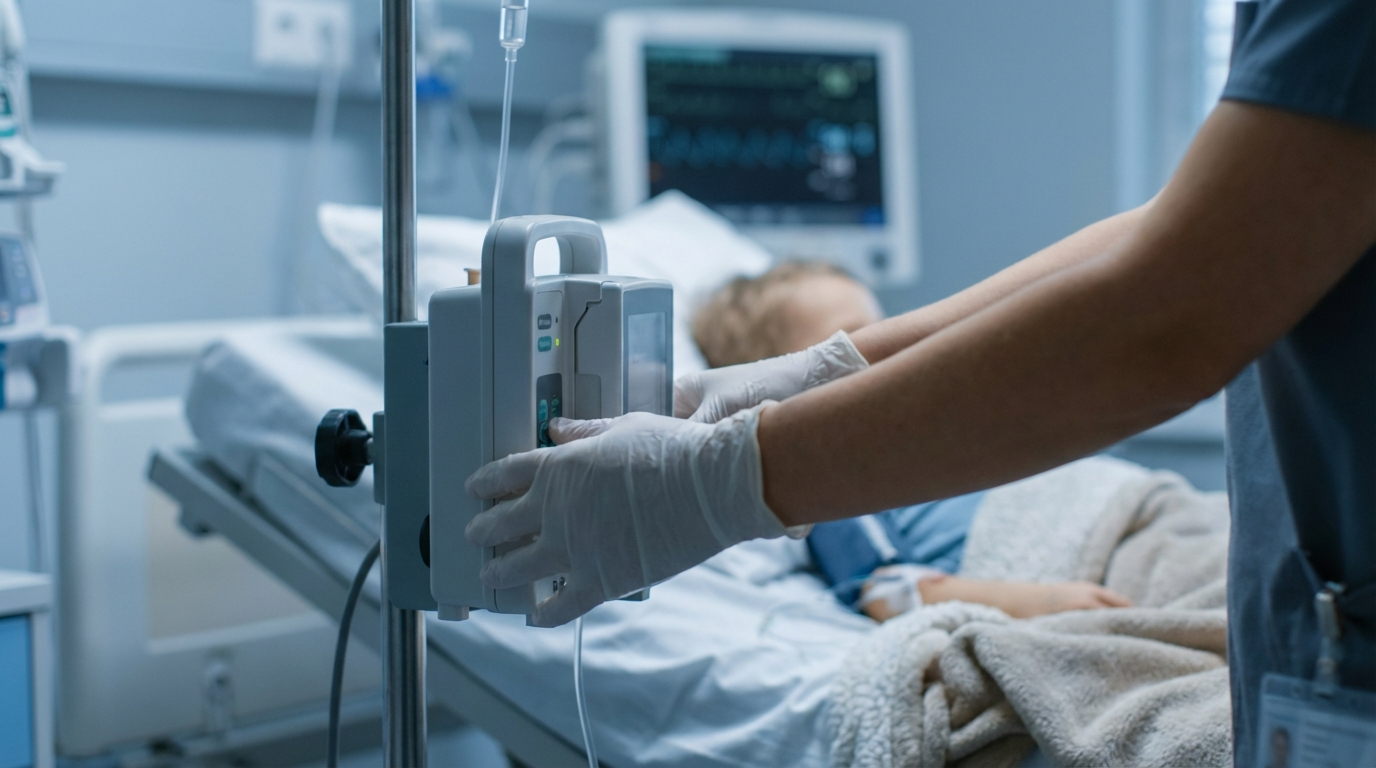
Diabetic ketoacidosis (DKA) is the most common endocrine emergency in childhood and poses significant therapeutic challenges even for experienced emergency teams. Approximately 15–70% of all pediatric type 1 diabetes presentations manifest with DKA – the wide range reflects regional differences in early diagnosis. Mortality in specialized centers is below 1%, yet iatrogenically co-induced cerebral edema remains the most feared complication and accounts for the majority of DKA-associated deaths in children. A structured, guideline-based approach is essential, one that consistently integrates controlled rehydration, low-dose insulin therapy, and close monitoring.
Pathophysiology – Why Children Are Particularly at Risk
Insulin deficiency in DKA leads to uninhibited lipolysis with massive ketone body production (acetoacetate, β-hydroxybutyrate), while hepatic gluconeogenesis simultaneously increases. The resulting hyperglycemia causes osmotic diuresis with consequent dehydration and electrolyte loss. The extent of fluid deficit in children is typically 5–10% of body weight.
Children are particularly vulnerable for several reasons:
- Higher ratio of brain volume to skull volume predisposes to cerebral complications during osmotic shifts.
- Lower physiological reserve – hemodynamic decompensation occurs more rapidly than in adults.
- Frequently a first-time presentation – lack of prior experience in families delays diagnosis.
- Children are less able to verbalize symptoms, making clinical assessment of severity more difficult.
Cerebral edema in pediatric DKA is not fully understood pathophysiologically. A vasogenic component due to inflammatory processes as well as a cytotoxic mechanism caused by osmotic dysbalance from overly rapid decline in serum osmolality are discussed. The clinical consequence: administer fluid and insulin in a controlled, predictable manner – never "aggressively correct."
Diagnostic Criteria and Severity Classification
The diagnosis of DKA in childhood is based on three pillars:
- Hyperglycemia: Blood glucose > 200 mg/dL (> 11 mmol/L)
- Metabolic acidosis: Venous pH < 7.3 or bicarbonate < 15 mmol/L
- Ketonemia/ketonuria: β-hydroxybutyrate > 3 mmol/L or significant ketonuria
DKA Severity Grades
| Parameter | Mild | Moderate | Severe |
|---|---|---|---|
| Venous pH | < 7.3 | < 7.2 | < 7.1 |
| Bicarbonate (mmol/L) | < 15 | < 10 | < 5 |
| Estimated fluid deficit | 5% | 7% | 10% |
| Clinical status | Alert, oriented | Reduced, drowsy | Somnolent to comatose |
Severe DKA (pH < 7.1) mandates management in a pediatric intensive care unit or an appropriately equipped monitored setting.
Initial Laboratory Workup
When DKA is suspected, the following labs should be drawn immediately:
- Blood gas analysis (venous is sufficient for pH and bicarbonate)
- Blood glucose (point-of-care and laboratory)
- β-hydroxybutyrate (capillary or venous)
- Electrolytes: sodium, potassium, chloride, phosphate, magnesium, calcium
- Urea, creatinine
- Calculated serum osmolality
- Corrected sodium: Na_corrected = Na_measured + 1.6 × (glucose [mg/dL] − 100) / 100
- Complete blood count (leukocytosis as a stress response is common and does not automatically indicate infection)
- If febrile or clinical suspicion: infection workup (urine culture, blood culture, CRP)
Corrected sodium is an essential trend parameter: A decline in corrected sodium during therapy is a warning sign of impending osmotic dysbalance and must prompt immediate reevaluation of the fluid strategy.
Emergency Management – Structured Approach in the First Hour
Initial Assessment Using the ABCDE Approach
Before initiating specific DKA therapy, a standardized primary assessment is performed:
- A – Airway: Secure the airway in children with altered consciousness. Intubation only if absolutely necessary – controlled ventilation can dangerously lower pCO₂ too rapidly and thereby increase the risk of cerebral edema.
- B – Breathing: Recognize Kussmaul breathing as a sign of metabolic compensation and do not suppress it.
- C – Circulation: Capillary refill time, heart rate, blood pressure. In shock: volume boluses as described below.
- D – Disability: Assess and document GCS. Pupillary response.
- E – Exposure: Temperature, weight (essential for all calculations).
Intravenous Access and Initial Measures
- Establish two peripheral IV lines.
- Immediate blood draw (see above).
- Cardiac monitor, pulse oximetry, frequent blood pressure measurement.
- Urinary catheter in severe DKA or children with altered consciousness for accurate fluid balance.
- Document weight – all calculations are based on this.
Fluid Therapy – The Critical Balance
Fluid therapy is the most delicate aspect of pediatric DKA management. Overly aggressive rehydration is associated with an increased risk of cerebral edema.
Initial Bolus (Only for Hemodynamic Instability)
- 10 mL/kg of 0.9% NaCl over 30–60 minutes.
- For persistent shock: repeat up to a maximum of 20–30 mL/kg in the first hour.
- For hemodynamically stable children: Do not give a bolus – proceed directly with the rehydration infusion.
Rehydration Phase
Fluid calculations are based on ISPAD recommendations (International Society for Pediatric and Adolescent Diabetes):
Formula:
Total fluid over 48 h = Maintenance requirement (48 h) + Deficit − Boluses already given
Maintenance requirement per the Holliday-Segar formula:
- Up to 10 kg: 100 mL/kg/24 h
- 10–20 kg: 1000 mL + 50 mL/kg for each kg above 10 kg
- > 20 kg: 1500 mL + 20 mL/kg for each kg above 20 kg
Deficit: Severity × body weight (e.g., 7% dehydration in a 30 kg child = 0.07 × 30,000 mL = 2100 mL)
Total volume infused evenly over 48 hours (not over 24 hours!).
The hourly infusion rate should generally not exceed 1.5 to 2 times the maintenance requirement.
Maximum infusion rate: In practice, generally do not exceed 250 mL/h regardless of body weight.
Infusion Solutions
- Initial phase (first 4–6 hours): 0.9% NaCl (isotonic).
- Subsequently: Balanced crystalloid solution or 0.9% NaCl with potassium supplementation.
- Add glucose (5% or 10% dextrose) to the infusion once blood glucose drops to 250–300 mg/dL (14–17 mmol/L).
- Target: Lower blood glucose slowly, approximately 50–75 mg/dL per hour (not faster!).
Insulin Therapy – Low-Dose and Continuous
Starting the Insulin Infusion
- Do not start in the very first hour – stabilize fluids and potassium first.
- Begin at the earliest 1 hour after initiation of fluid therapy, particularly to avoid an overly rapid decline in osmolality.
Dosing
- Regular insulin (Actrapid® or equivalent): 0.05–0.1 units/kg/h as a continuous IV infusion.
- Current evidence favors the lower dosing range of 0.05 units/kg/h in children, especially in those under 5 years of age and in severe DKA.
- No initial insulin bolus – increases the risk of cerebral edema without therapeutic benefit.
Practical Preparation (Example)
- 50 units of regular insulin in 50 mL of 0.9% NaCl (= 1 unit/mL).
- A 20 kg child at 0.05 units/kg/h requires: 20 × 0.05 = 1 unit/h = 1 mL/h.
- Flush the infusion tubing with insulin solution beforehand (insulin binds to plastic).
Titrating the Insulin Infusion
- Target blood glucose drop: 50–75 mg/dL/h.
- If glucose falls faster: Add glucose to the infusion (5–10% dextrose), do not stop the insulin infusion.
- Insulin does not only act on glucose – it suppresses ketogenesis. Stopping insulin leads to a rebound in ketone body levels.
- Reduce the insulin rate only when pH > 7.3, bicarbonate > 15 mmol/L, and the patient is clinically improving.
Potassium Replacement – Mandatory and Early
In DKA, there is always a total body potassium deficit, even when the initial serum potassium appears normal or elevated (shift from the intracellular space due to acidosis and insulin deficiency). Once insulin is administered, potassium levels drop rapidly.
- Potassium > 5.5 mmol/L: No replacement, close monitoring (every 1–2 hours).
- Potassium 3.5–5.5 mmol/L: 40 mmol KCl/L of infusion solution (= 20 mmol as KCl + 20 mmol as potassium phosphate, if available).
- Potassium < 3.5 mmol/L: Begin potassium replacement BEFORE insulin administration! Dose: 0.3–0.5 mmol/kg/h under cardiac monitoring.
- Maximum infusion rate via peripheral access: 0.5 mmol/kg/h.
- Check serum potassium at least every 2 hours during the acute phase.
Monitoring – Close and Structured
Hourly During the Acute Phase
- Vital signs (HR, BP, SpO₂, respiratory rate)
- Blood glucose (point-of-care)
- Neurological status: GCS, pupils
- Intake and output
Every 2–4 Hours
- Venous blood gas (pH, bicarbonate, pCO₂)
- Electrolytes (Na, K, Cl, phosphate)
- Calculate corrected sodium
- β-hydroxybutyrate
Documentation
A DKA flowsheet is strongly recommended. Infusion rates, insulin doses, laboratory values, and neurological assessments are documented in a time-correlated manner. Many centers use standardized DKA protocol sheets.
Cerebral Edema – Recognition and Treatment
Clinically significant cerebral edema occurs in approximately 0.5–1% of pediatric DKA cases but disproportionately affects children with a first-time presentation, younger children (< 5 years), and severe forms of DKA. It typically manifests 4–12 hours after the start of treatment.
Warning Signs (Modified Muir Criteria)
Major criteria:
- Altered/fluctuating level of consciousness
- Sustained heart rate decrease (not explained by volume status)
- Age-inappropriate incontinence
Minor criteria:
- Vomiting after initiation of therapy
- Headache
- Lethargy, difficult to arouse
- Diastolic blood pressure > 90 mmHg
- Age < 5 years
One major criterion or two minor criteria → act immediately!
Immediate Treatment for Suspected Cerebral Edema
- Mannitol 20%: 0.5–1 g/kg IV over 10–15 minutes (may be repeated after 30 minutes).
- Alternatively or additionally: Hypertonic saline (3% NaCl): 2.5–5 mL/kg over 10–15 minutes.
- Elevate the head of the bed to 30°, keep the head in a neutral midline position.
- Reduce the infusion rate to one-third.
- Intubate only if airway failure is imminent – avoid hyperventilation! Do not lower the target pCO₂ below the level of respiratory compensation.
- Immediate CT/MRI once the patient is stabilized.
- Neurosurgical consultation for space-occupying edema.
Bicarbonate – Restrictive Indication
Routine administration of sodium bicarbonate is not recommended in pediatric DKA. The acidosis corrects itself with adequate insulin and fluid therapy.
Bicarbonate administration may be considered for:
- Life-threatening hyperkalemia with ECG changes
- pH < 6.9 with hemodynamic instability despite adequate volume resuscitation
If indicated: 1–2 mmol/kg NaHCO₃ infused slowly over 60 minutes, never as a bolus.
Transition to Subcutaneous Insulin Therapy
The switch from IV insulin infusion to subcutaneous insulin is made when the following criteria are met:
- pH > 7.3
- Bicarbonate > 15 mmol/L
- β-hydroxybutyrate < 1 mmol/L (or trending down to < 0.6 mmol/L)
- Child tolerates oral fluid intake
- Clear consciousness
Important: Stop the IV insulin infusion only 30–60 minutes after the first subcutaneous insulin dose to avoid a gap in insulin action (the half-life of IV insulin is approximately 5 minutes).
Common Pitfalls in Practice
- Overly rapid fluid administration: The most common preventable error. Rehydration over 48 hours is the standard.
- Initial insulin bolus: Contraindicated in children.
- Stopping insulin when glucose drops: Instead, add glucose to the infusion.
- Forgetting potassium: Potassium drops rapidly under insulin therapy – hypokalemia can lead to lethal arrhythmias.
- Misinterpreting Kussmaul breathing as "hyperventilation": The deep breathing is compensatory and must not be sedated.
- Bicarbonate administration without a strict indication: Shifts the oxygen dissociation curve unfavorably, paradoxical CNS acidosis.
- Inadequate neurological monitoring: GCS must be documented hourly.
Practical Training
The structured management of pediatric DKA requires the interplay of algorithm knowledge, fluid calculations, and clinical vigilance – particularly for the early recognition of cerebral edema. In the PALS course by Simulation Tirol, you systematically train pediatric emergency scenarios including endocrine emergencies in a simulation-based format. The combination of structured approach, team communication, and hands-on practice prepares you to make the right decisions with confidence, even in time-critical situations.
Want to practice this hands-on?
In our PALS-Kurs (Pediatric Advanced Life Support) you practice this topic hands-on with high-tech simulators and experienced instructors.
More Articles
Airway Management in Neonates: Suctioning and Stimulation
When and how suctioning is indicated in neonates, tactile stimulation as the first step, and common errors in initial respiratory support. A practical guide for healthcare professionals in the delivery room and prehospital setting.
Broselow Tape and Weight Estimation in Pediatric Emergencies
In pediatric emergencies, medications must be dosed based on weight. This article explains the use of the Broselow Tape, alternative estimation formulas, and dosing aids for the most common emergency medications in pediatrics.
Dehydration in Children: Severity Grading and Rehydration
Assessing the degree of dehydration in infants and young children is an essential pediatric emergency skill. This article covers clinical signs, oral vs. intravenous rehydration, bolus administration, and electrolyte monitoring.